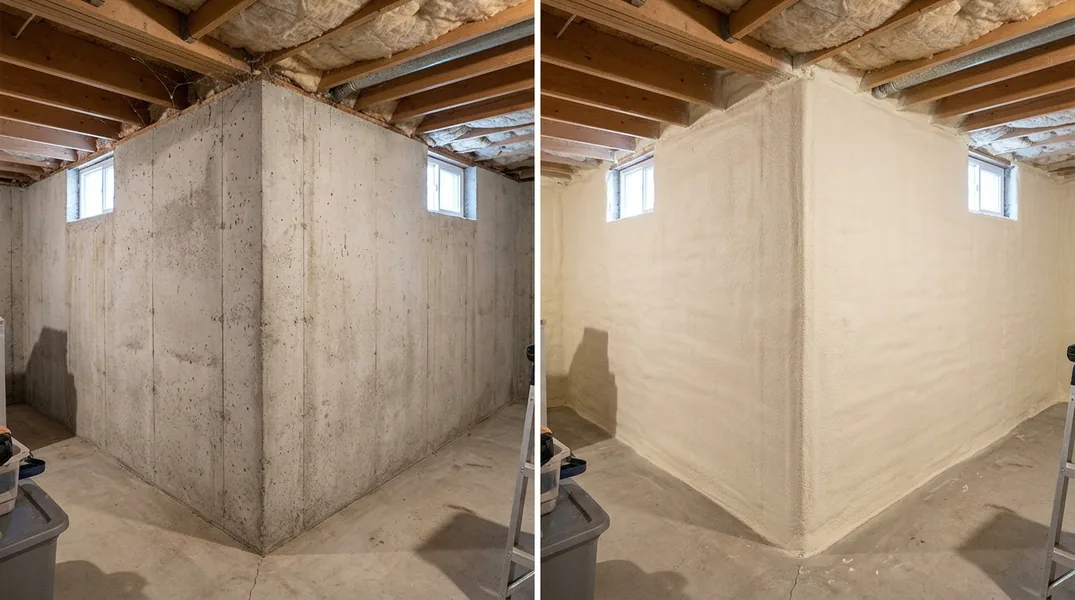
Understanding Spray Foam Insulation for Your Attic
When it comes to keeping your La Crosse home comfortable and energy efficient, few solutions compare to Attic Spray Foam Insulation. Unlike traditional fiberglass batts or blown-in cellulose, spray foam expands to fill every cavity, crack, and void in your attic space. This comprehensive coverage creates an air-tight seal that dramatically reduces heat loss in winter and heat gain in summer, translating directly to lower energy bills and a more comfortable living environment year-round.
The key advantage of spray foam lies in its dual functionality: it insulates while simultaneously air sealing. Traditional insulation materials leave gaps around pipes, wiring, and framing members where conditioned air can escape. Spray foam eliminates these thermal weak points entirely. For homeowners in La Crosse dealing with Wisconsin's cold winters, this air sealing capability is invaluable. However, choosing between the two main types of spray foam requires understanding their distinct properties and how they perform in attic applications.
What Is Open Cell Spray Foam Insulation?
Open Cell Spray Foam Insulation is a lighter, more flexible material with a lower density than its closed cell counterpart. When applied, the foam expands significantly and creates a sponge-like structure where the cells are not completely sealed. This design allows water vapor to pass through the material, making it more breathable. Open cell foam typically has an R-value of approximately 3.5 to 3.6 per inch, meaning you need more thickness to achieve higher insulation values.
The breathability of open cell foam is particularly important in attic applications because it allows moisture to migrate through the material rather than becoming trapped. This characteristic makes open cell spray foam an excellent choice for vented attics where some air circulation is expected. Additionally, open cell foam is generally more affordable than closed cell alternatives, making it an attractive option for homeowners working within a budget. The material is also easier to cut and trim after installation, and it doesn't require special protective equipment during application in the same way closed cell foam does.
What Is Closed Cell Spray Foam Insulation?
Closed Cell Spray Foam Insulation is a denser, more rigid material where the cells are completely sealed and filled with a blowing agent. This creates a vapor barrier within the foam itself, preventing moisture from passing through. Closed cell foam delivers superior insulation performance with an R-value of approximately 6.0 to 6.5 per inch, meaning you need less thickness to achieve the same insulation value as open cell foam. This higher R-value per inch makes closed cell foam ideal for situations where attic space is limited.
Beyond superior insulation, closed cell foam offers additional structural benefits. Its rigidity can actually strengthen roof assemblies and help distribute loads more evenly. Closed cell foam also provides excellent air sealing and acts as its own vapor barrier, which is why it's often the preferred choice for unvented attic spray foam applications. When you create a sealed attic with closed cell foam, you're essentially making your attic part of the conditioned space of your home. This approach is particularly effective in Wisconsin's climate, where moisture control and air sealing are critical for long-term performance.
Open Cell vs Closed Cell: Performance Comparison for La Crosse Homes
The choice between open cell and closed cell spray foam ultimately depends on your specific attic configuration, moisture concerns, and budget. Open cell foam excels in vented attics where breathability is an asset. Its lower cost makes it accessible for larger projects, and homeowners appreciate its ease of installation and trimming. If your attic will remain vented and you're primarily focused on insulation value and cost-effectiveness, open cell foam delivers solid results at a lower price point.
Closed cell foam, conversely, is the superior choice for creating a sealed attic insulation system. Its higher R-value means you can achieve better insulation with less material, which matters when attic height is constrained. The vapor barrier properties of closed cell foam prevent moisture accumulation in the attic cavity, eliminating conditions that lead to mold, wood rot, and structural damage. For homeowners who want to convert their attic into conditioned space or who live in areas prone to moisture problems, closed cell foam is the investment that pays dividends over time. In Onalaska and surrounding areas, where humidity and temperature fluctuations are common, the moisture protection of closed cell foam can extend the life of your roof structure significantly.
Attic Spray Foam Insulation Cost in La Crosse: What to Budget
Understanding the financial investment required for spray foam insulation is crucial for homeowners making this decision. Open cell spray foam typically costs between $0.50 and $1.00 per board foot, while closed cell foam ranges from $1.00 to $1.50 per board foot or more, depending on local market conditions and application complexity. For an average 1,500 square foot attic, you might expect to invest $3,000 to $6,000 for open cell foam or $6,000 to $12,000 for closed cell foam. These ranges reflect material and labor costs for professional installation, which is essential for optimal performance.
While closed cell foam carries a higher upfront cost, many homeowners find the investment justified by superior performance and durability. The increased R-value means you achieve better insulation with less material, and the vapor barrier properties protect your attic structure for decades. Additionally, the energy savings from improved insulation and air sealing often offset the initial investment within seven to ten years. To understand the specific pricing for your home and attic configuration, we recommend contacting La Crosse Spray Foam Insulation at (608) 668-4765 or requesting a free estimate. Our team will assess your attic, discuss your goals, and provide transparent pricing for both open cell and closed cell options.
Which Type Is Right for Your La Crosse Home?
Determining whether open cell or closed cell spray foam is right for your home requires honest evaluation of your attic's current condition, your long-term plans for the space, and your budget constraints. If you have a vented attic that you plan to keep vented, and you're primarily seeking improved insulation without a major structural upgrade, open cell foam is a practical choice that delivers solid performance at a reasonable cost. If moisture has been a concern in your attic, or if you're dealing with ice dams and condensation issues common to Wisconsin winters, closed cell foam's superior moisture management becomes a compelling advantage.
For homeowners considering converting their attic into conditioned living space, or who want to create an unvented attic spray foam assembly, closed cell foam is the clear choice. The higher R-value, vapor barrier properties, and structural benefits make it the premium solution for attic transformation projects. Regardless of which type you select, professional installation is non-negotiable. Improper application can compromise performance, create moisture problems, or leave air gaps that defeat the purpose of spray foam insulation. La Crosse Spray Foam Insulation brings years of expertise in both open cell and closed cell applications, ensuring your attic receives the quality installation that maximizes performance and longevity.
Getting Started with Professional Attic Spray Foam Installation
The next step in your spray foam journey is a professional assessment of your attic. A qualified contractor will evaluate your current insulation, identify air leaks, assess moisture conditions, and understand your goals for the space. This information informs the recommendation between open cell and closed cell foam and ensures the installation plan addresses your specific needs. Many homeowners are surprised to learn about hidden air leaks, inadequate insulation in certain areas, or moisture problems that only become apparent during a professional inspection.
Don't let another winter pass with an underperforming attic. Contact La Crosse Spray Foam Insulation today to schedule your free estimate. Call us at (608) 668-4765 or visit our website to learn more about how spray foam insulation can transform your home's energy efficiency and comfort. Our team is ready to answer your questions about open cell vs closed cell options and help you make the decision that's right for your La Crosse home.
Looking for a professional spray foam insulation contractor in La Crosse? La Crosse Spray Foam Insulation responds fast for all your spray foam insulation needs.
Get a Free Quote