The Problem with Flat Attic Insulation in Mid-Century Homes
Mid-century ranch homes are charming, efficient in their original design, and abundant throughout Onalaska and Holmen. Built between the 1940s and 1970s, these homes feature clean lines, open floor plans, and modest footprints that made them affordable and popular. However, one thing these charming ranches were not designed for is today's energy costs and climate challenges.
The attics in these older homes typically contain flat, settled insulation that has lost much of its original R-value over decades. Whether it's old fiberglass batts, mineral wool, or outdated blown-in cellulose, this insulation has compressed, deteriorated, or simply failed to keep up with modern thermal demands. Homeowners often notice temperature swings between seasons, higher heating and cooling bills, and uneven comfort throughout their homes. The problem is compounded by air leaks around penetrations, inadequate sealing, and the simple fact that insulation materials degrade over time.
Replacing or upgrading your attic insulation is one of the most cost-effective ways to improve energy efficiency and comfort. The challenge is choosing the right material for your specific situation, especially when you're weighing Attic Spray Foam Insulation against traditional options like blown-in or fiberglass.
Spray Foam vs Blown-In Insulation: Which Performs Better in Attics?
When comparing spray foam vs blown in insulation, the differences are significant and worth understanding. Blown-in insulation, whether fiberglass or cellulose, is loose material that gets distributed across your attic floor using a machine. It's relatively inexpensive and quick to install. However, blown-in insulation has a critical weakness: it doesn't seal air leaks. It simply fills cavities with loose material, leaving gaps around pipes, wiring, vents, and other penetrations where air can escape.
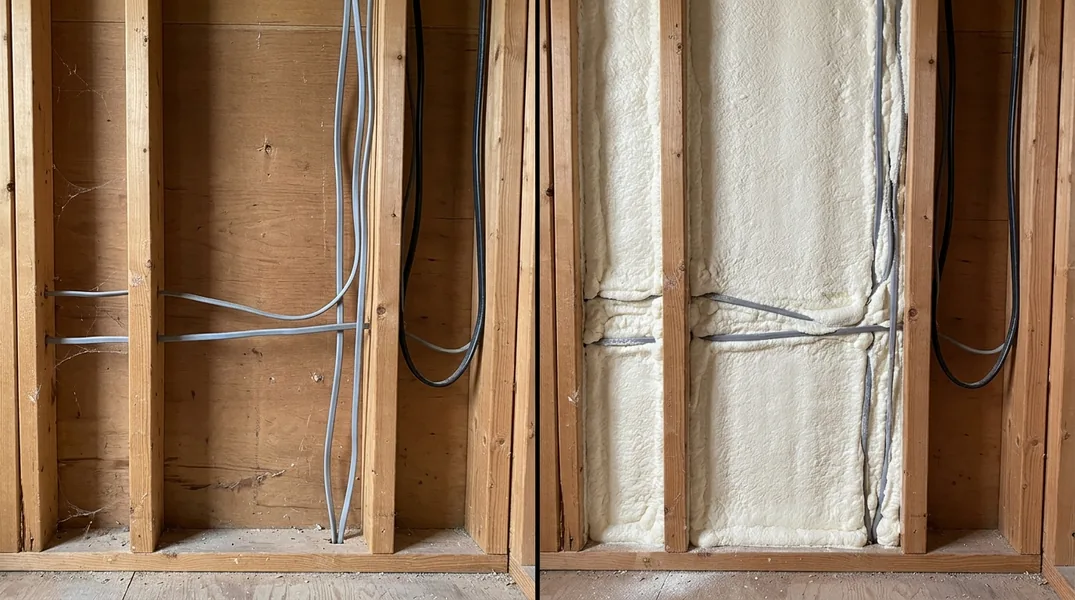
Spray foam, by contrast, expands as it's applied and creates an air-tight seal. When professionals apply spray foam to your attic, it adheres to surfaces, fills irregular spaces, and creates a continuous thermal barrier. This means no air leakage through small gaps or cracks. In La Crosse, where winters are harsh and heating costs are substantial, that air-sealing capability translates directly to lower energy bills and better temperature control. Studies show that spray foam can reduce energy consumption by 15 to 20 percent compared to blown-in alternatives, primarily because it eliminates air infiltration.
Another advantage of spray foam is that it doesn't settle or compress over time the way blown-in insulation does. Blown-in materials can lose 10 to 20 percent of their R-value within the first few years as they settle under their own weight. Spray foam maintains its R-value indefinitely, making it a better long-term investment for homeowners who plan to stay in their homes.
Spray Foam vs Fiberglass: Why Fiberglass Falls Short in Modern Attics
Fiberglass batts and rolls are the traditional choice for attic insulation, and for good reason: they're affordable and easy to install. However, spray foam vs fiberglass reveals why fiberglass is becoming outdated for serious energy upgrades. Fiberglass batts require careful installation to be effective, and they must fit snugly between joists without compression. In reality, many homeowners find that batts are difficult to fit properly around obstructions, and they leave air gaps that reduce effectiveness.
Fiberglass also absorbs moisture, which can lead to mold growth and degradation over time. In the humid Upper Midwest climate, this is a genuine concern. If your attic experiences any moisture infiltration or condensation, fiberglass can become a liability rather than an asset. Spray foam, particularly Closed Cell Spray Foam Insulation, resists moisture and actually helps prevent condensation by creating a vapor barrier. This added protection can extend the life of your roof and attic structure.
From a performance standpoint, fiberglass typically achieves an R-value of 3.2 to 3.8 per inch, while spray foam delivers R-values ranging from 3.6 to 7.0 per inch, depending on the type. That means you need less spray foam to achieve the same thermal resistance, and you get superior air sealing as a bonus. For homeowners in mid-century ranches dealing with flat, settled insulation, the upgrade to spray foam is a significant step forward.
Spray Foam vs Cellulose: Durability and Performance Comparison
Cellulose is a popular blown-in insulation made from recycled paper. It's environmentally friendly, affordable, and has decent R-value per inch (around 3.6). Many homeowners choose cellulose because of its sustainability credentials and lower cost. However, spray foam vs cellulose reveals important trade-offs that matter for your long-term comfort and expenses.
Cellulose is highly susceptible to moisture damage and settling. It can absorb moisture from humid air, and if it gets wet, it loses insulating value and can develop mold. The material also settles significantly over time, sometimes losing 10 to 20 percent of its R-value within a few years. In addition, cellulose requires chemical fire retardants to meet building codes, and these additives can off-gas over time. While the health impact is debated, some homeowners prefer to avoid the chemical exposure altogether.
Spray foam, particularly Open Cell Spray Foam Insulation, offers better moisture management and zero settling. It's more durable, requires no chemical treatment, and maintains its R-value for decades. For homeowners in Holmen and surrounding areas who want a set-it-and-forget-it solution, spray foam is the superior choice. The initial investment is higher, but the long-term performance and durability justify the cost.
Best Insulation for Attic: Why Spray Foam Wins for Mid-Century Ranches
When you're evaluating the best insulation for attic upgrades, you need to consider several factors: R-value, air sealing, moisture resistance, durability, and long-term cost of ownership. Spray foam excels in all of these categories. It delivers superior R-value per inch, creates an air-tight thermal envelope, resists moisture, doesn't settle, and maintains its performance for the life of your home.
For mid-century ranches with flat, compromised attic insulation, spray foam is the most effective solution. It addresses not only the insulation itself but also the air leakage that makes blown-in and fiberglass options less effective. Homeowners who upgrade to spray foam typically notice immediate improvements in comfort, and their energy bills reflect the efficiency gains within the first heating or cooling season.
The real-world performance difference is substantial. A home in La Crosse with a poorly insulated attic might spend $200 to $300 per month on heating during winter. After a spray foam upgrade, that same home might drop to $150 to $200 per month, depending on the extent of the work and other factors. Over a decade, that's savings of $10,000 to $20,000 or more. The payback period for spray foam insulation typically ranges from 5 to 8 years, after which you're simply enjoying lower energy costs.
Attic Spray Foam Insulation Cost in La Crosse: What to Budget
One of the most common questions homeowners ask is about cost. Spray foam insulation is more expensive upfront than blown-in or fiberglass alternatives. You can expect to pay between $1.50 and $3.50 per board foot for spray foam, depending on whether you choose open-cell or closed-cell options and the complexity of your attic. For a typical 1,200 square foot attic, a full spray foam upgrade might cost $3,000 to $7,000 or more, whereas blown-in insulation might cost $1,500 to $3,000.
However, when you factor in energy savings, durability, and the elimination of future settling or replacement, the true cost of ownership strongly favors spray foam. You're not just buying insulation; you're buying decades of reliable performance and lower utility bills. La Crosse Spray Foam Insulation offers competitive pricing and can help you understand the exact costs for your specific project. Every attic is different, and factors like accessibility, existing insulation removal, and the size of the space all affect the final price.
The best way to understand your options and costs is to schedule a free estimate with a local professional. La Crosse Spray Foam Insulation serves homeowners throughout the region and can assess your mid-century ranch's specific needs. Call (608) 668-4765 to discuss your project and get a detailed quote that breaks down materials, labor, and expected energy savings.
Looking for a professional spray foam insulation contractor in La Crosse? La Crosse Spray Foam Insulation responds fast for all your spray foam insulation needs.
Get a Free Quote