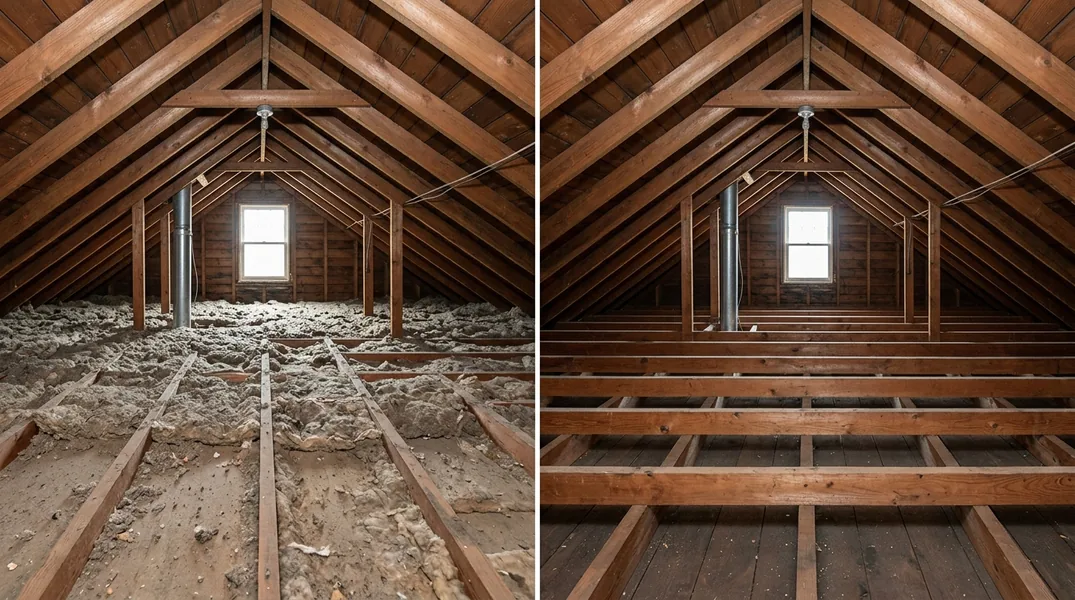
Why Downtown La Crosse's Balloon-Framed Homes Need Special Attention
The historic neighborhoods of downtown La Crosse, particularly those perched near the bluffs, are characterized by charming balloon-framed architecture that dates back over a century. These homes were built with a structural method that's quite different from modern construction: the wall cavities run continuously from the basement all the way to the attic, creating interconnected air passages throughout the entire building envelope. While this construction style gives these properties their distinctive character and appeal, it also creates significant energy efficiency challenges that most homeowners don't fully appreciate until they receive their heating bills.
The continuous cavities in balloon-framed homes act like vertical highways for air movement and heat loss. During La Crosse's brutally cold winters, warm air rises through these cavities and escapes, while cold air infiltrates from the basement and foundation. Traditional insulation methods like fiberglass batts or blown cellulose simply cannot seal these interconnected spaces effectively. This is where Attic Spray Foam Insulation becomes not just beneficial, but often essential for these historic properties.
Is Spray Foam Insulation Worth It for Historic Homes?
For balloon-framed homes near the bluffs, the answer is a resounding yes, though the reasoning differs from standard construction. The primary value proposition of spray foam lies in its ability to create an air-tight seal that actually adheres to the structural cavities and fills every gap, crack, and void. Unlike traditional insulation that can settle, compress, or leave air gaps over time, spray foam expands and hardens to form a continuous thermal barrier. This means that the energy savings you gain in year one are likely to persist for decades, making the initial investment increasingly worthwhile as years pass.
The financial case for spray foam in these historic properties is compelling. Homeowners with balloon-framed construction often report energy bill reductions of 20 to 30 percent after proper insulation, particularly when combined with air sealing measures. Given that heating costs in the La Crosse area can easily exceed $2,000 annually, even a 20 percent reduction translates to $400 per year in savings. Over a 30-year lifespan, that's $12,000 in direct energy savings, often exceeding the cost of the insulation work itself. Beyond the dollars-and-cents calculation, spray foam also improves comfort by eliminating cold drafts and hot spots, increases home durability by reducing moisture infiltration, and can even improve indoor air quality by sealing out exterior pollutants and pests.
Is Spray Foam Insulation Safe? Addressing Common Concerns
Safety is a legitimate concern that deserves a thorough, honest answer. When properly installed by trained professionals using quality materials and following industry best practices, spray foam insulation is safe. The chemicals used in modern spray foam (polyurethane or polyiso blends) undergo rigorous testing and must comply with EPA and building code standards. The installation process itself involves careful mixing, application, and curing under controlled conditions. However, improper installation, use of substandard materials, or inadequate ventilation during application can create genuine safety risks, including off-gassing, respiratory irritation, and potential health effects.
The key to safety is hiring a qualified, licensed contractor who uses professional-grade equipment and follows established protocols. La Crosse Spray Foam Insulation employs trained technicians who understand proper application rates, cure times, and ventilation requirements. Professional installers also conduct post-installation inspections and quality checks to ensure the foam has cured properly and poses no ongoing risks. When you work with an established local company rather than attempting DIY application or hiring unlicensed operators, you gain peace of mind and verified safety compliance. If you have specific health concerns or sensitivities, discussing them directly with your contractor before work begins is essential.
Understanding Spray Foam Off-Gassing and What It Means for Your Home
Spray foam off-gassing is perhaps the most commonly misunderstood aspect of insulation safety. Off-gassing refers to the release of volatile organic compounds (VOCs) that can occur during and immediately after installation. Properly installed and fully cured spray foam should produce minimal off-gassing, with most chemical release occurring within the first 24 to 48 hours after application. However, if foam is applied too thickly, in inadequate ventilation, or with improper mixing ratios, off-gassing can be more pronounced and potentially irritating to occupants.
The practical steps to minimize off-gassing concerns are straightforward. First, ensure your contractor uses quality materials and proper application techniques. Second, plan your insulation project for a time when you can ventilate the home thoroughly, ideally opening windows and doors for several days after installation. Third, if you or family members have respiratory sensitivities, plan to stay away from the treated areas during initial curing. Professional contractors typically provide specific post-installation care instructions and ventilation recommendations. Closed Cell Spray Foam Insulation tends to cure faster and produce less prolonged off-gassing than open-cell varieties, making it a popular choice for occupied homes. If off-gassing concerns remain after discussing them with your contractor, contact La Crosse Spray Foam Insulation at (608) 668-4765 to discuss alternative approaches or additional ventilation strategies.
Spray Foam Insulation Pros and Cons: A Balanced Overview
Understanding both the advantages and limitations of spray foam helps you make an informed decision for your historic La Crosse home. The primary advantages include superior air sealing and thermal performance, long-term durability and stability, moisture resistance (particularly with closed-cell varieties), and the ability to fill irregular cavities and hard-to-reach spaces. Spray foam also provides structural reinforcement in some applications and can reduce noise transmission from outside. For homes like those near the bluffs with complex balloon-frame construction, these advantages are genuinely transformative in terms of comfort and efficiency.
The legitimate disadvantages warrant honest consideration. Spray foam typically costs more upfront than traditional insulation, ranging from $1.50 to $3.50 per board foot depending on type and application. Once cured, it's difficult and expensive to remove if future modifications are needed. Some people experience sensitivities to odors during curing, though this is temporary. Improper installation can create problems including incomplete filling, inadequate curing, or moisture trapping, which is why contractor selection is critical. Open Cell Spray Foam Insulation is less moisture-resistant than closed-cell and may not be appropriate for all applications. Additionally, spray foam's R-value per inch varies by type and density, so understanding the specific product being used is important for realistic performance expectations.
Spray Foam Insulation Problems: What Can Go Wrong and How to Prevent Them
Common spray foam problems typically stem from installation errors rather than material defects. Inadequate filling or voids left in cavities mean the insulation fails to deliver promised performance. Improper density or expansion can result in foam that's either too soft or so expanded that it warps framing or blocks ventilation paths. Moisture trapping occurs when closed-cell foam is applied to walls without proper vapor management, potentially leading to wood rot or mold in older homes. Chemical sensitivity reactions, though rare, can occur if off-gassing is excessive due to poor ventilation or improper application. Shrinkage over time, while minimal with quality foam, can create small gaps if installation wasn't done with precision.
Prevention requires selecting a contractor with proven experience in historic homes and balloon-frame construction. Ask for references from similar projects, verify licensing and insurance, and request a detailed explanation of their application process and quality assurance procedures. Discuss your home's specific characteristics, including any moisture or ventilation concerns, so the contractor can recommend appropriate foam types and supplementary measures. For Wall & Injection Foam Insulation projects in particular, pre-installation moisture testing and post-installation verification are essential. Getting a free estimate from La Crosse Spray Foam Insulation includes an in-home assessment where our team can identify potential challenges specific to your property and recommend solutions tailored to your situation.
Taking the Next Step: Planning Your Insulation Project
If you own one of the historic balloon-framed homes that give downtown La Crosse its distinctive character, investing in proper insulation is one of the most impactful improvements you can make. The combination of energy savings, improved comfort, and long-term durability makes spray foam a compelling choice for these unique properties. The key is working with a contractor who understands your home's specific needs and can apply solutions appropriately and safely.
La Crosse Spray Foam Insulation has been serving homeowners throughout the region with professional, reliable insulation solutions. Whether you're interested in Attic Spray Foam Insulation, wall cavity filling, or exploring other options, our team can provide honest guidance and expert installation. Call us today at (608) 668-4765 or visit our website to schedule your free estimate. Let's discuss how spray foam can transform your historic home's energy performance.
Looking for a professional spray foam insulation contractor in La Crosse? La Crosse Spray Foam Insulation responds fast for all your spray foam insulation needs.
Get a Free Quote