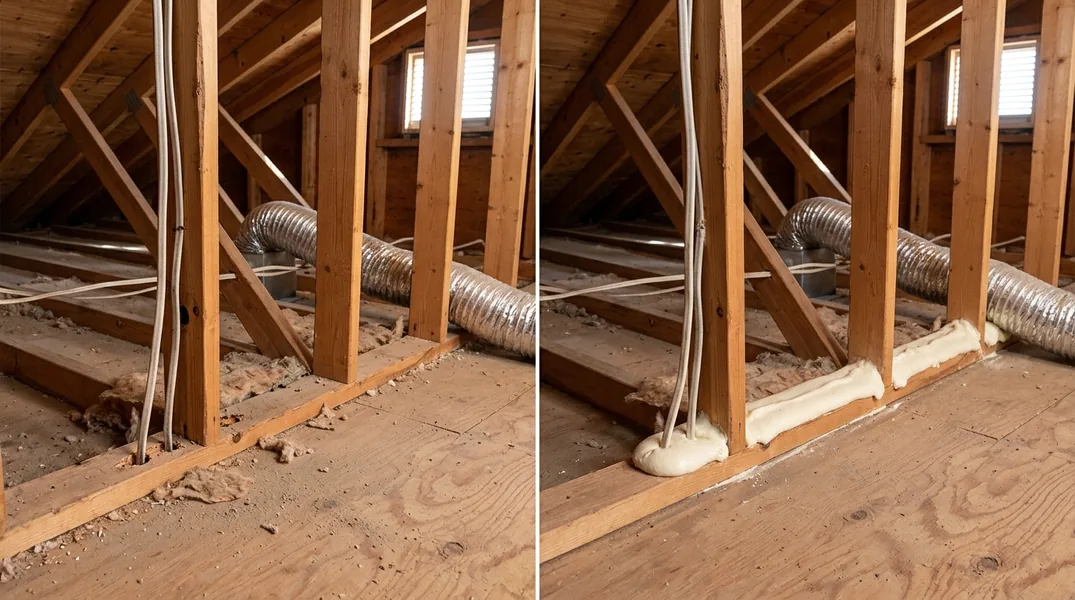
Understanding Spray Foam Insulation R Value Per Inch
One of the most common questions homeowners ask is how much insulation they really need. The answer starts with understanding R-value, which measures thermal resistance. Attic Spray Foam Insulation comes in two main types, and each delivers different R-value performance per inch of thickness.
Closed Cell Spray Foam Insulation typically achieves an R-value of 6 to 7 per inch, making it the most efficient option available. Open Cell Spray Foam Insulation, by contrast, delivers approximately 3.5 to 3.6 R-value per inch. This difference matters significantly when you're deciding how thick your insulation needs to be. Closed cell foam requires less material to reach the same thermal resistance, which can affect both installation time and overall project cost.
R Value Requirements by State: What Does Wisconsin Need?
Wisconsin's climate demands serious attic insulation. The state's building code and energy efficiency standards typically require R-38 to R-49 for attic insulation, depending on your specific location and the age of your home. For homeowners in La Crosse, meeting or exceeding R-38 is the baseline expectation, though R-49 provides superior long-term energy savings and comfort.
If you're currently underinsulated, you have two pathways forward. The first is air sealing combined with adding blown-in insulation or fiberglass batts on top of what you have. The second is a complete spray foam retrofit. How thick should spray foam be to meet Wisconsin's requirements? If you choose closed cell foam, you'd need approximately 6 to 7 inches to hit R-38, or 7 to 8 inches for R-49. With open cell foam, you're looking at 10 to 14 inches for the same R-values. This thickness difference is why many Onalaska and Holmen homeowners choose closed cell when space is limited.
Air Sealing vs Full Spray Foam: Which Is Right for Your Attic?
Not every attic needs a complete spray foam overhaul. If your attic already has decent insulation (R-20 or higher) but you're losing energy through air leaks, air sealing alone might be the smart move. Air sealing targets the gaps, cracks, and penetrations where conditioned air escapes. Common culprits include gaps around electrical boxes, plumbing vents, recessed lights, and the attic hatch. A professional energy audit can pinpoint these problem areas and quantify how much energy you're wasting.
Full spray foam insulation, on the other hand, does double duty. It provides both thermal resistance and air sealing in one application. This makes it ideal if your current insulation is thin, compressed, or uneven. Spray foam conforms to irregular shapes, fills cavities completely, and creates an air-tight seal simultaneously. The trade-off is cost and the need for adequate attic depth. If you have limited headroom or your existing insulation is already at R-30 or higher, topping up with air sealing and blown-in insulation may deliver 80 percent of the benefit at a fraction of the price. For homes with severely underinsulated or missing attic insulation, full spray foam is almost always the better long-term investment.
Insulation Tax Credit and Rebates: Don't Leave Money on the Table
One reason many homeowners delay attic insulation projects is cost. What they don't realize is that federal and state incentives can significantly reduce out-of-pocket expenses. The federal Energy Efficient Home Improvement Tax Credit allows eligible homeowners to claim up to 30 percent of qualifying insulation costs, with a maximum credit of $3,200 per year through 2032. Wisconsin also offers various pricing incentives and utility rebates for energy-efficient upgrades.
To qualify, your insulation project must meet specific energy code requirements and be installed by a qualified contractor. This is where working with an experienced local company like La Crosse Spray Foam Insulation becomes valuable. We understand Wisconsin's tax credit requirements and can help ensure your project qualifies. Don't assume you're ineligible because of income or home age. Many homeowners in French Island and surrounding areas have successfully claimed these credits. Contact us at (608) 668-4765 to discuss whether your project qualifies for tax credits and rebates.
How Thick Should Spray Foam Be? Practical Guidance for La Crosse Homes
Determining the ideal spray foam thickness requires balancing three factors: your target R-value, attic space constraints, and budget. As mentioned earlier, closed cell foam achieves higher R-values per inch, so it's the choice when attic depth is limited. However, open cell foam costs less and still provides excellent insulation if you have the vertical space. Most La Crosse attics can accommodate 6 to 8 inches of closed cell foam without structural concerns, which is typically sufficient to meet or exceed Wisconsin code requirements.
The decision also depends on whether you're doing a complete spray foam job or combining spray foam with existing insulation. If you have old fiberglass batts that are settled or compressed, removing them and installing 6 to 7 inches of closed cell spray foam is cleaner and more effective than trying to add spray foam on top. If your attic is mostly empty, 7 to 8 inches of closed cell or 12 to 14 inches of open cell will put you comfortably at R-49. Your attic's ventilation requirements also matter. Spray foam doesn't require the same ventilation as traditional insulation, which gives you more flexibility in design. Request a free estimate from our team, and we'll assess your specific situation and recommend the optimal thickness for your home.
Making the Decision: When to Call a Professional
If you're uncertain whether air sealing or full spray foam is right for your home, a professional energy assessment is the best first step. Many homeowners discover they're losing 20 to 30 percent of their heating and cooling energy through attic air leaks and inadequate insulation. The cost of an assessment is minimal compared to years of wasted energy bills and comfort issues during Wisconsin winters.
La Crosse Spray Foam Insulation has helped hundreds of homeowners make this decision. We'll evaluate your current insulation, identify air leaks, calculate your R-value gap, and explain your options without pressure. Whether you need air sealing, blown-in insulation, or a complete spray foam retrofit, we'll recommend what actually makes sense for your home and budget. Call us at (608) 668-4765 or visit https://la-crosse-spray-foam.com to schedule your consultation today.
Looking for a professional spray foam insulation contractor in La Crosse? La Crosse Spray Foam Insulation responds fast for all your spray foam insulation needs.
Get a Free Quote